
Starting solids is one of the most exciting milestones in your baby’s journey , but it can also feel overwhelming. From knowing when your baby is ready, to understanding the safest way for them to sit, there’s a lot for parents to navigate.
With modern approaches like baby led weaning becoming more popular, parents are now looking for more than just a high chair , they’re looking for a safe, supportive environment that helps their baby learn, explore and enjoy food.
In this guide, we’ll walk you through everything you need to know about feeding your baby in a high chair, so you can feel confident at every stage.
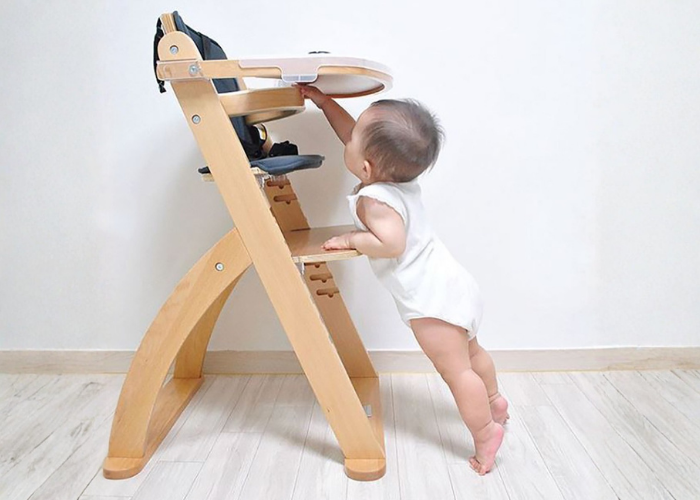
1. When Can My Baby Start Using a High Chair?
Soft and squishy is only good for your baby’s cheeks not their mattress. Check that the mattress is tested to the Australian Standard (AS/NZS 8811-1:2013 – Sleep Surface Test for Firmness) so you know that you reduce the risk of your baby suffocating or blocking their airways.
Most babies are ready to start solids and use a high chair at around 3-6 months of age , but it’s not just about age.
Your baby may be ready when they:
- Can sit upright with minimal support
- Have good head and neck control
- Show interest in food (reaching, watching, opening their mouth)
A supportive high chair helps your baby feel stable and secure, which is essential when introducing food. Many parents feel forced to start this stage early but take your time and watch your baby milestones, as every child is different.
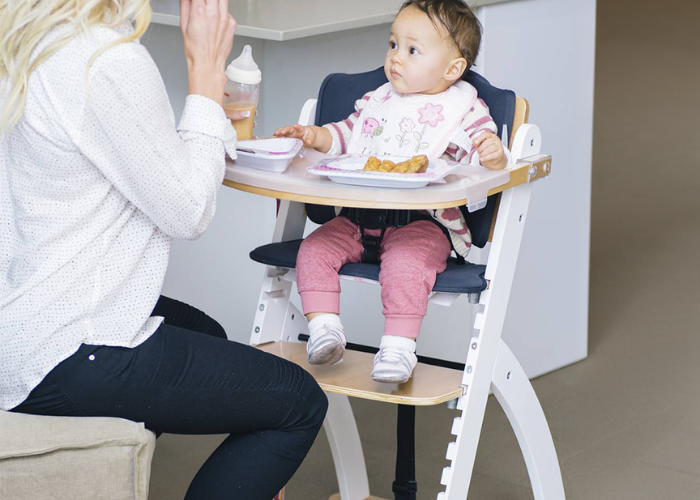
2. Why Proper Posture Matters When Feeding Your Baby
One of the most important (and often overlooked) aspects of feeding is your baby’s posture.
A well-supported seated position helps your baby:
- Focus on eating
- Stay comfortable during meals
- Feel stable and confident
- Reduces a chocking hazard
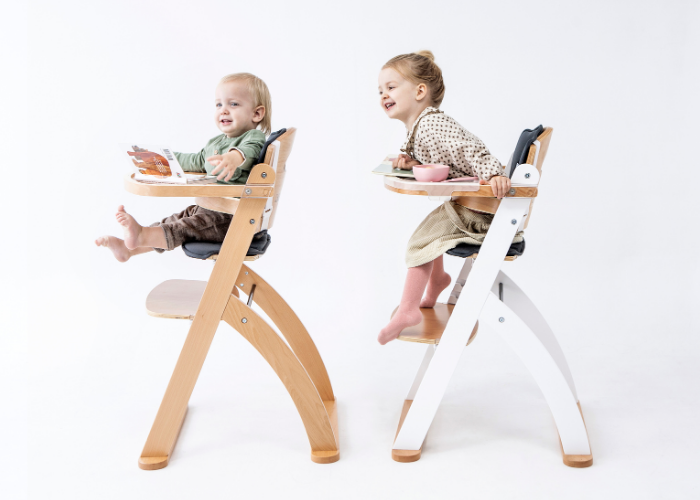
For optimal positioning, your baby should be:
- Sitting upright (not leaning back or slumping forward)
- Supported through their back
- Positioned close to the table or tray
- Able to rest their feet on a stable surface as they grow
Good posture supports safer feeding and creates a more positive mealtime experience, so don’t be tempted to use a high chair that leans your child back as this is not the optimal posture for feeding.
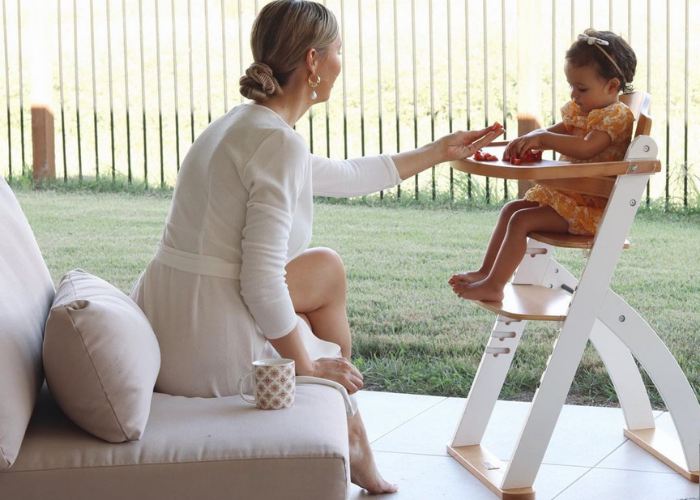
3. Why a Footrest is Essential in a High Chair
A footrest is one of the most important features of a well-designed high chair , and something many parents don’t realise they need.
Without foot support, babies can feel unstable, which may lead to:
- Increased wriggling
- Poor posture
- Less focus on eating
With proper foot support, children are more likely to:
- Sit comfortably for longer
- Feel secure and balanced
- Engage more confidently with food
This is especially important when introducing solids and encouraging self-feeding.
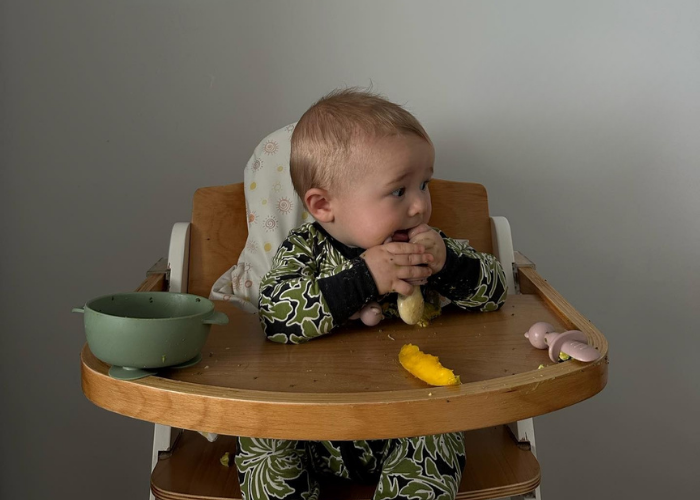
4. What is Baby Led Weaning?
Baby Led Weaning is an approach to introducing solids where babies feed themselves soft, appropriately prepared foods instead of being spoon-fed.
This approach encourages:
- Independence
- Motor skill development
- A positive relationship with food
To support baby led weaning, your baby needs:
- A stable, upright seated position
- A safe and supportive high chair
- The ability to sit comfortably at the table
Whether you choose baby led weaning, traditional spoon feeding, or a combination of both, the right high chair setup and cutlery num num spoons and cups plays an important role.
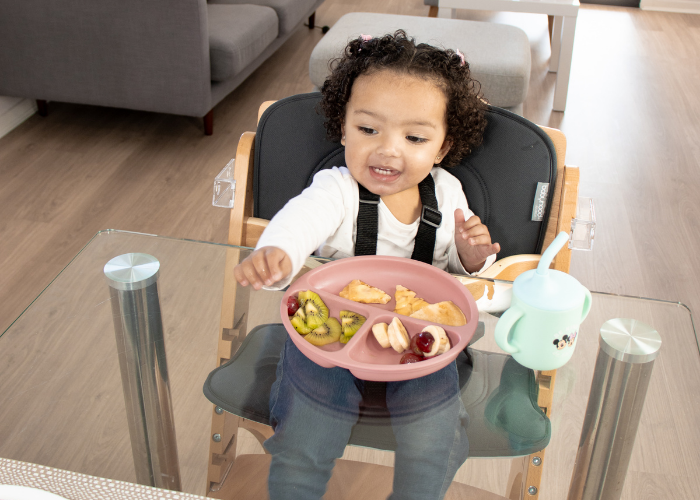
5. Should My Baby Use a Tray or Sit at the Table?
Both options can work well , it often comes down to your home and routine.
Using a tray:
- Convenient and easy to clean
- Creates a defined feeding space
Sitting at the table:
- Encourages social interaction
- Helps your baby learn by watching others
Not all high chairs are designed to allow both options so select carefully to ensure your highchair is designed in Australia for our dining tables.
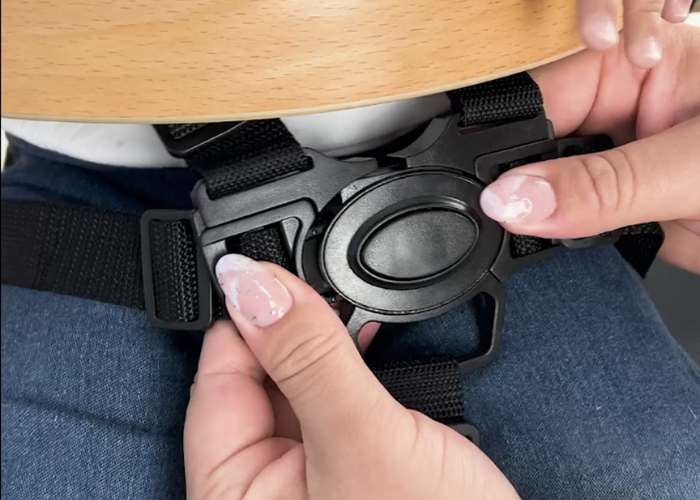
6. Do I Need to Use a Harness?
Yes , especially in the early stages.
A harness helps:
- Keep your baby safely positioned
- Prevent standing or climbing
- Reduce the risk of falls
Even if your baby seems settled, using the harness provides an important layer of safety during mealtimes.
7. How Can I Support Safer Feeding?
While no product can eliminate risk, there are important steps you can take to support safer feeding:
- Ensure your baby is sitting upright and stable
- Always supervise your baby during meals
- Use a supportive high chair with proper positioning
- Avoid feeding when your baby is overly tired or distracted
Creating a calm, supported environment helps your baby focus on eating and exploring food safely.

8. Choosing the Right First Cutlery
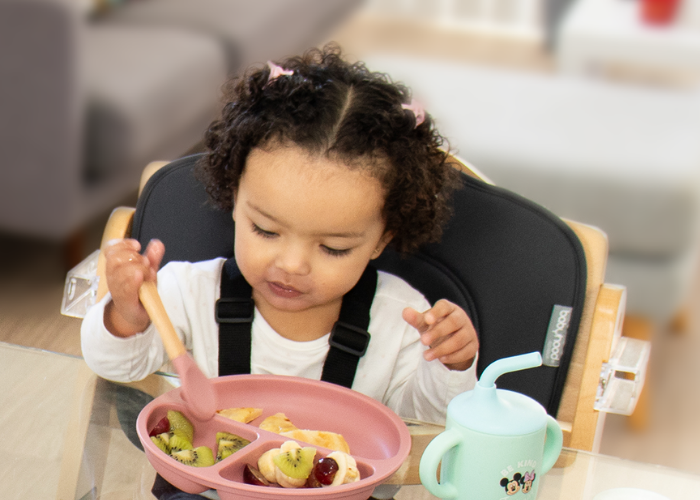
As your baby begins exploring food, the right utensils can make a big difference in building confidence and coordination.
Traditional spoons are often difficult for babies to use independently. Modern weaning spoons are designed to support early self-feeding by allowing babies to grip, dip and bring food to their mouth more easily.
What to look for in a spoon:
- A flat head design that works from any angle
- Easy grip handles for little hands
- A shape that supports early self-feeding without needing scooping skills
These types of spoons help reduce frustration and encourage babies to actively participate in mealtimes.
For a range of options see [Cups, bottles and utensils]
9. Supporting Independent Drinking
Learning to drink is another important milestone during the feeding journey.
Transitioning from bottles to cups can take time, and a well-designed training cup can support this process by helping babies learn to sip independently while reducing spills.
What to look for in a sippy cup:
- Easy-to-hold dual handles
- A controlled flow to help reduce spills
- A design that encourages independent drinking
Like self-feeding, learning to drink is a gradual process , and the right tools can help make it more manageable for both parents and babies.
For a range of options see [Cups, bottles and utensils]
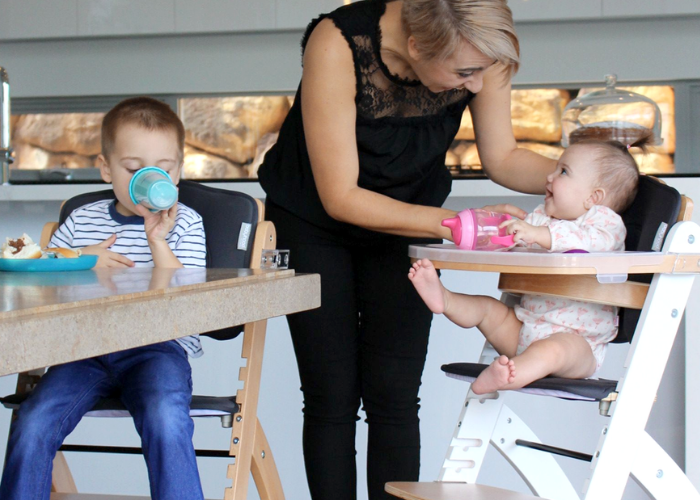
10. How Long Should My Baby Sit in a High Chair?
High chairs are designed for mealtimes , not extended sitting.
It’s best to:
- Use the high chair during meals and snacks
- Avoid using it as a general seat for long periods
This helps support your baby’s development and keeps mealtimes positive.
11. What Should I Look for in a High Chair?
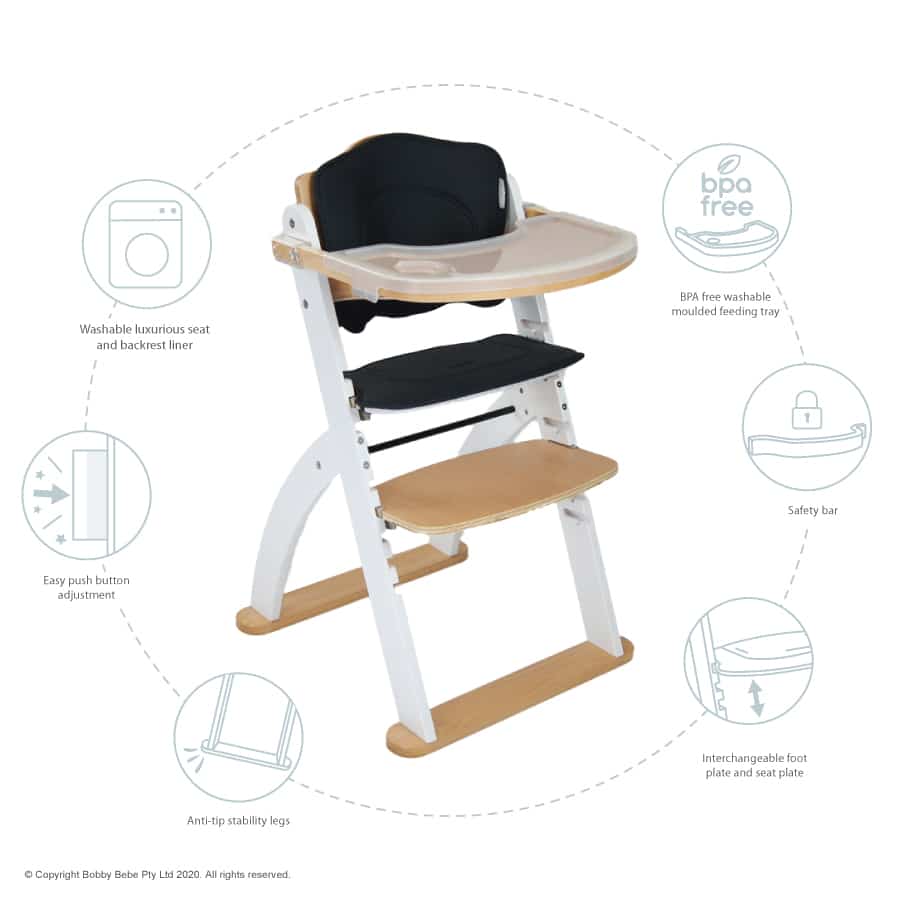
When choosing a high chair, look for features that support both safety and development:
- Stable, sturdy construction
- An adjustable tray to bring meals closer
- A supportive footrest
- Upright, ergonomic seating
- Adjustability that does not require tools
- Secure harness system
- Easy-to-clean surfaces
- Adjustable design that grows with your child
A well-designed high chair can support your child from their first tastes through to toddler independence and beyond.
12. What Should I Avoid in a High Chair?
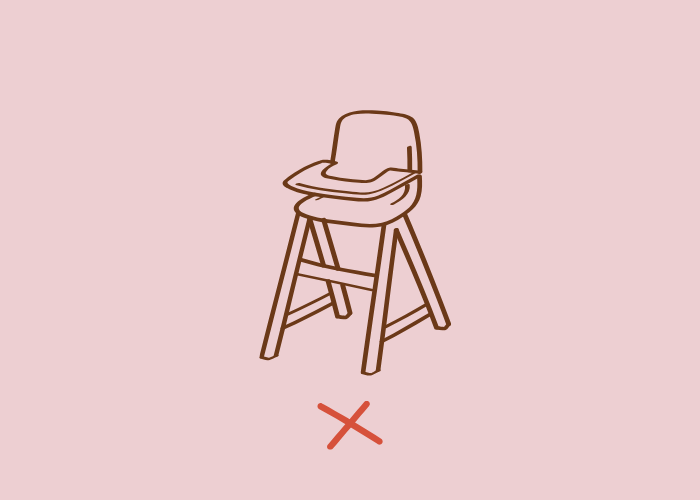
- A high chair that lays back or leans back
- A high chair with no adjustable footrest
- A plastic high chair
- A high chair with lots of crevasses
- A high chair with wheels
- A low high chair
- A high chair that does not position your child too low or high on the dinner table
- A high chair that has no anti tip features (skinny pronged legs)
13. Making Mealtimes Easier (and More Enjoyable)
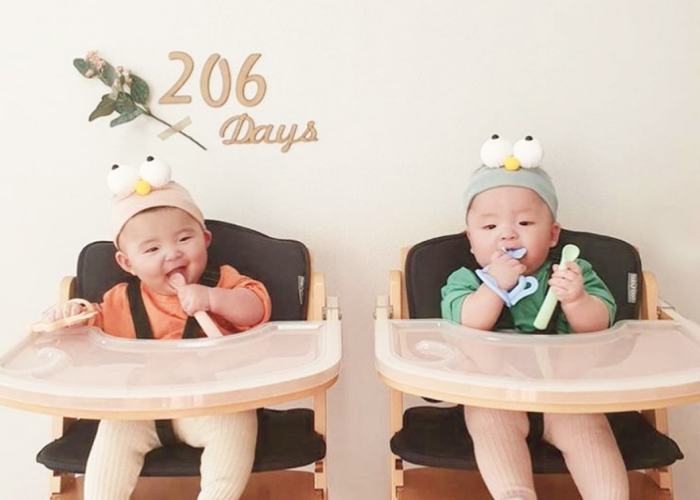
Feeding your baby is about more than just nutrition , it’s about connection, learning and shared moments.
With the right setup, your baby can:
- Feel confident exploring new foods
- Join in family mealtimes
- Develop independence over time
And for parents, a thoughtfully designed high chair can make everyday routines simpler, safer and more enjoyable – even with the mess!
Final Thoughts
Starting solids doesn’t have to be stressful.
By focusing on proper positioning, a supportive high chair, and a calm feeding environment, you can help your baby build a positive relationship with food from the very beginning.
Every baby is different , take your time, follow your baby’s cues, and enjoy the journey.
Looking for a high chair designed to support your baby’s feeding journey?
Explore our ergonomic, adjustable high chair designed for modern families and everyday living – even the messy moment!
Featured Products
Cleaning, materials and how long a high chair lasts
Baby led weaning is messy by design, so how easily a chair cleans decides how much you enjoy it. Look for a seat and tray you can wipe rather than one with seams and crevices that trap food, and check whether the tray comes off with one hand, because your other hand will be holding a baby.
Materials behave differently. Timber looks better in a kitchen and needs wiping rather than soaking. Plastic and moulded seats are the quickest to clean and the easiest to hose off outside. Fabric inserts should be removable and machine washable, and it is worth checking that before you buy rather than after the first bolognese.
On lifespan, a chair that adjusts as your child grows will see you through to the table, and some convert to a junior seat afterwards. That changes the real cost more than the sticker price does.
Harness and safety features
A five point harness is the one to look for, because a three point harness lets a determined child stand up. Use it every time, including for short sits, since falls from high chairs are among the most common injuries at this age.
Check the chair is stable when you push it from the side as well as the front, and that the footrest is at a height your child can actually reach. A child with unsupported dangling legs pushes against the tray instead, which is what tips a chair.
Keep the chair away from the table edge, benches and anything your child can push off against, and never leave them in it unattended.
Choosing the chair
Our guide on what to look for when buying a high chair works through stability, harness, tray, cleaning and safe use in order. When you are ready to compare models, the current range of high chairs is here.
-
Sale!
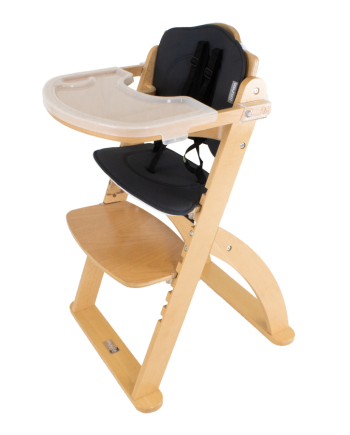
Kaylula Ava Forever High Chair Beech
-
Sale!
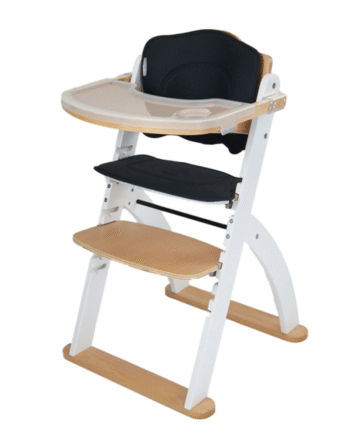
Kaylula Ava Forever High Chair White/Beech
-
Sale!
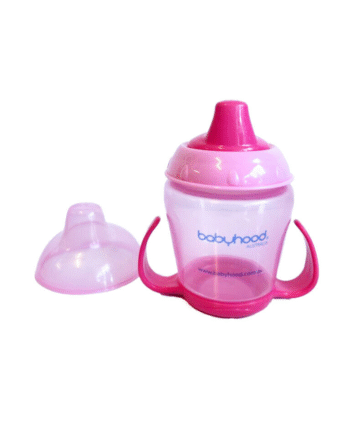
Num Num 2 Handle Non Spill Cup – BPA FREE
-
Sale!
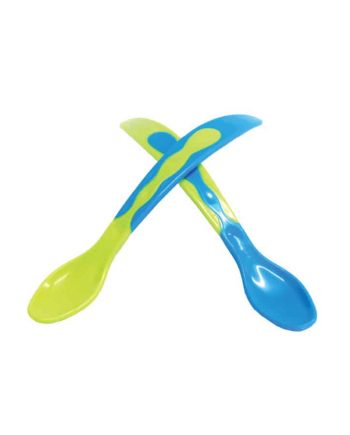
Num Num 2 pack Weaning Spoon
Original price was: $9.95.$7.95Current price is: $7.95. Select options This product has multiple variants. The options may be chosen on the product page