
6 Things To Know Before Buying A Pram
(Number 2 will save you $$$)
Did you know that most families will buy at 2-3 prams per child?
It can be an overwhelming experience, so let us help you to make the right decision for your family from the beginning to save you money and time.
1. What do you intend to use your pram for?
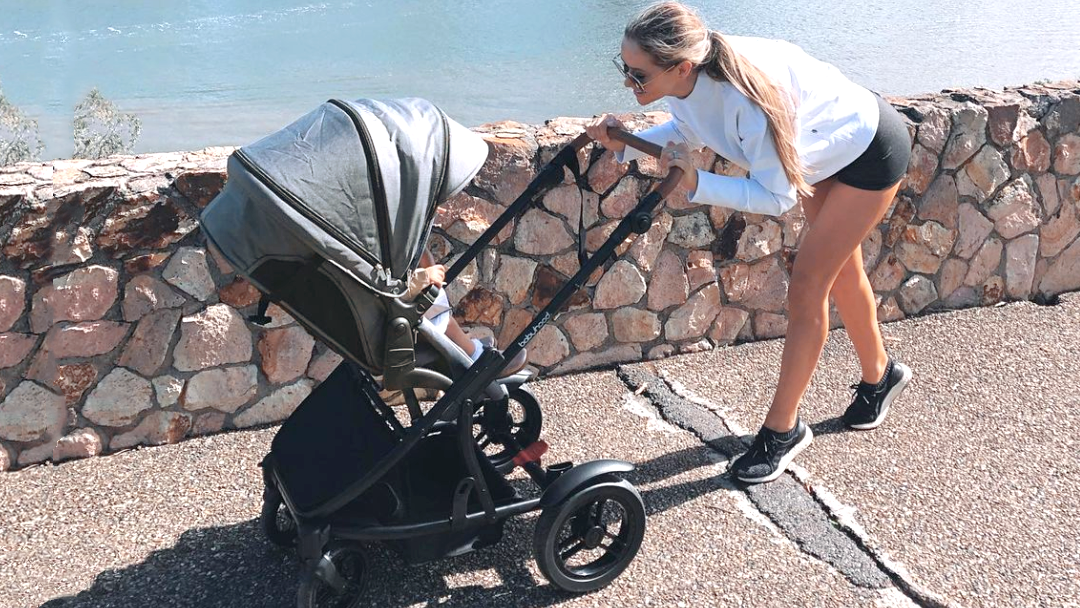
Often parents will buy a pram based on a friend’s recommendation, but we and our lifestyles are often different from our friends. There is no point buying a pram that is designed for jogging when you didn’t jog before baby and it is unlikely to take up running after having baby.
Ask yourself, questions like
• Do I need a single or double pram?
• Will I need to add a second seat for a toddler, in the near future?
• Can I really carry a 20kg pram, after having a baby?
• Where will I be using my pram?
2. Is your pram safe for your newborn baby or do you need to buy extras?
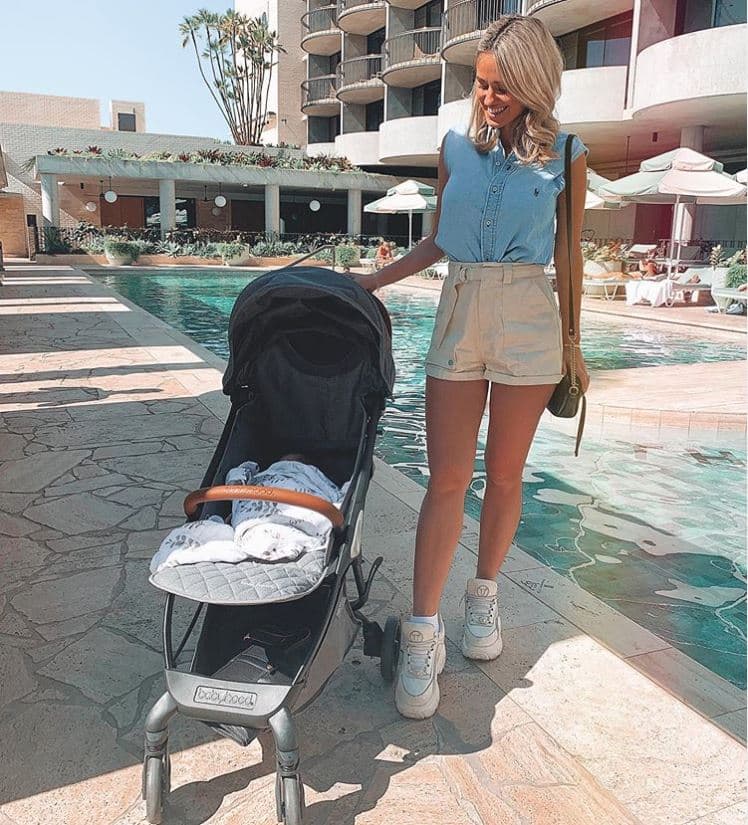
Most European prams are not designed for a newborn baby, as their upright seat style is not recommended for an infant (puts them chin to chest and increases the risk of asphyxiation). An infant should lay flat. To overcome this many brands will require you to purchase a separate bassinet which can only be used for a few months. Not only is costly for you but it takes up very expensive real estate in our already overcrowded cars and living spaces. So look for a seat that lays flat from the start, without having to use an extra bassinet.
If you use a baby bassinet, make sure your bassinet has a 5-point harness (as required by the Australian Standards). Many bassinets unfortunately do not include a harness, so they are not safe for infants.
3. Does your pram fold easily?
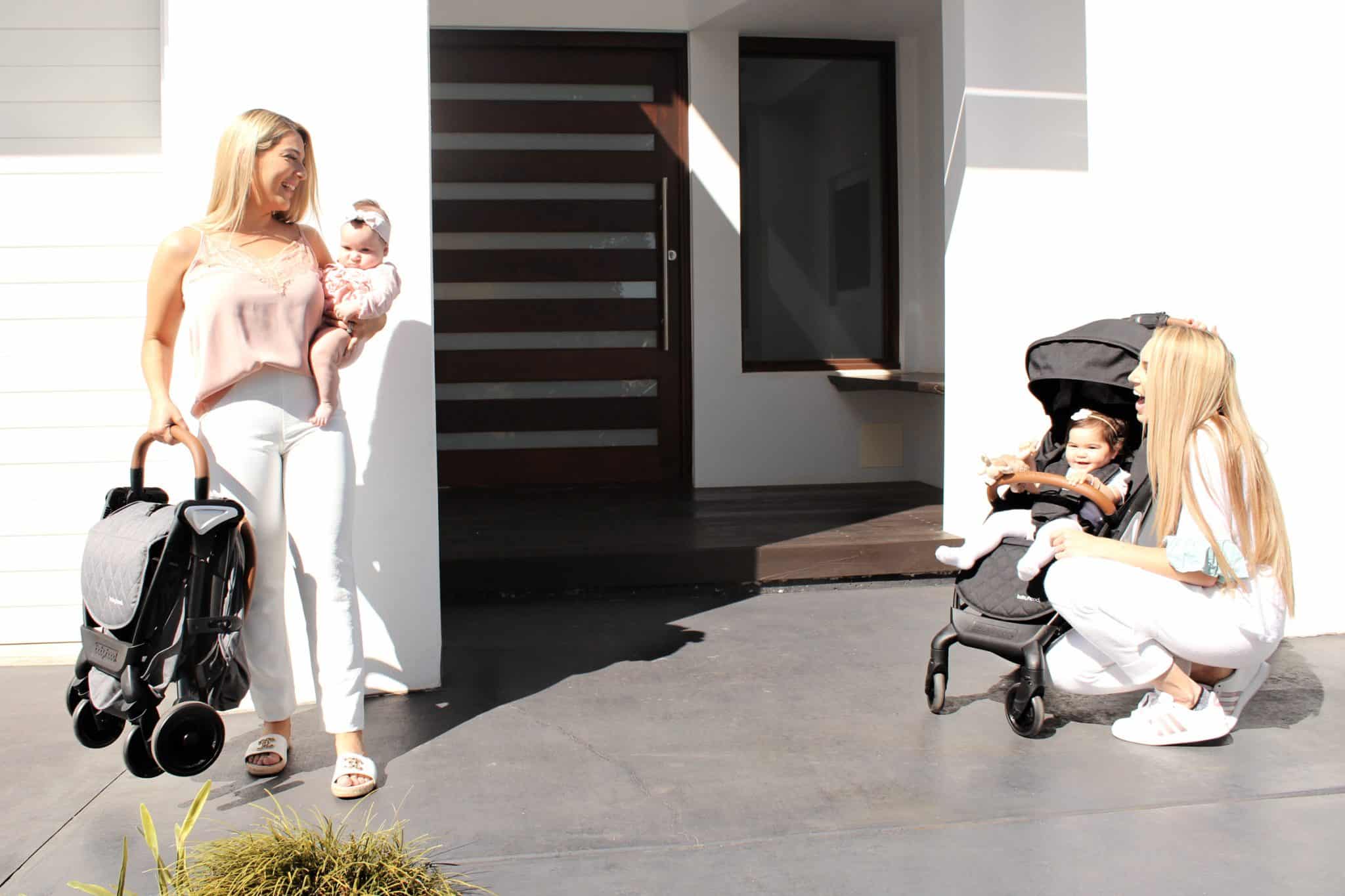
This is the number one problem for most women, as they struggle to open and close their pram. It is not that we are incompetent but when you have a crying baby in the car and you are rushing home from a busy day and you need to quickly fold your easy fold baby prams and pack it away, who needs the hassle of a pram that is too hard to fold.
4. Can you lift your pram?
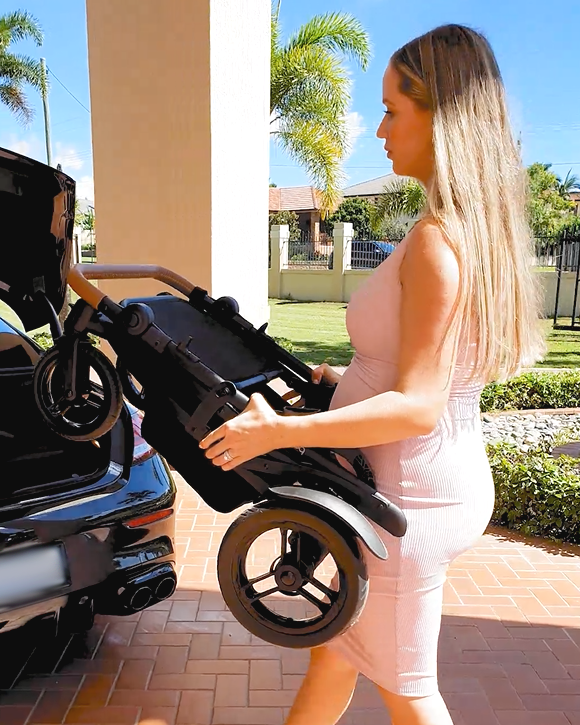
Often, after having a baby, we have not yet rebuilt our strength – so look for a pram that is either lightweight or separates in two parts, so you are never lifting one heaving load. Many prams weigh in excess of 20kgs or the brands forget to mention that the pram weight listed on their website do not include the wheels or the fabrics.
5. Will your pram fit in your car boot?
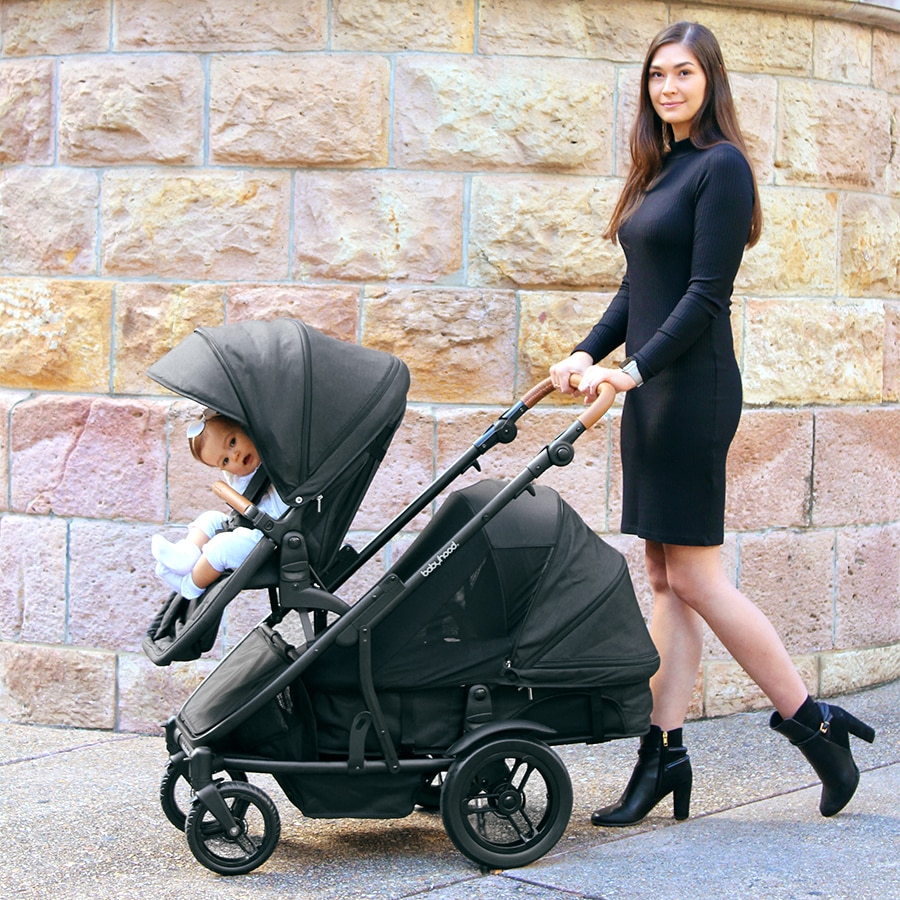
A small car is great for zipping around but sometimes the boot space is a little short, so make sure you check the dimensions of a pram, prior to purchase. Remember you also need space for bags, groceries and other items so make sure the pram doesn’t take up all your boot space.
6. Does your pram offer extra sun protection, safely?
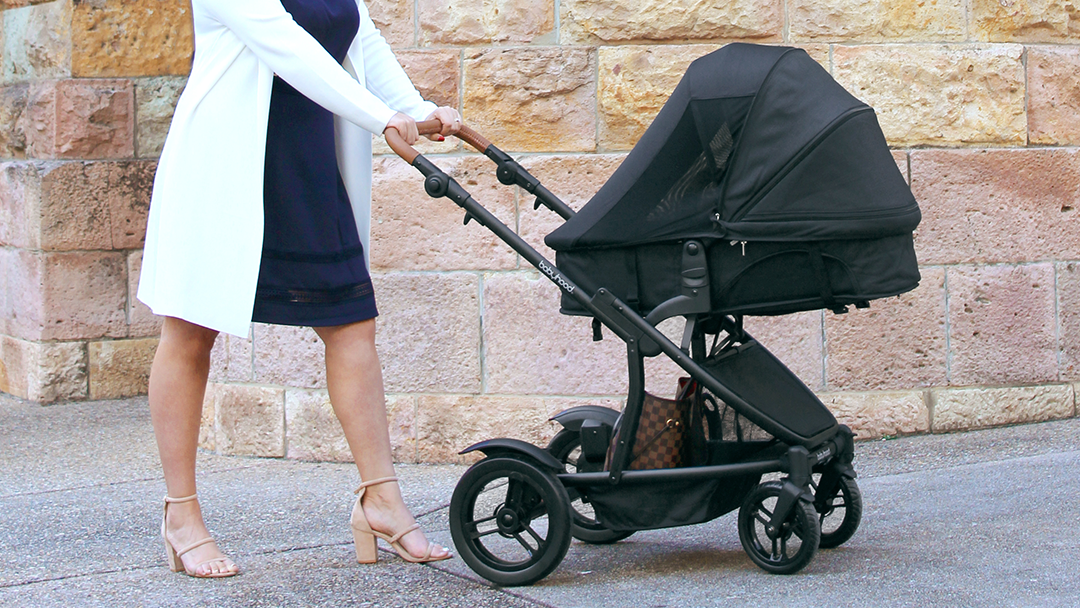
Our Australian climate is harsh. Look for a pram that offers full sun protection for your baby with a complete drape, canopy and 50+ UV protection on all the fabrics of the pram. Some canopies can offer only partial protection and unfortunately medical experts do not recommend that you cover the hood or pram with a blanket or cover, as this can significantly increase the temperature in the seat for you baby, making it unsafe. Look for a drape that is built into the hood, that allows airflow through vents – so your baby stays cool.
If you need more information to help you find the best option for you, please visit our Brisbane showroom or call us on (07) 3208 3555.
Featured Products
When to buy, and why the timing saves money
Most families buy the pram somewhere in the third trimester, which is late enough to have thought about it and early enough not to be rushed. Buying rushed is what costs money, because you end up taking whatever is in stock rather than what suits you.
Prams follow a model cycle, so there is usually a run out when a new version is announced. If the outgoing model does what you need, that is the single easiest saving available. Ask what is changing in the new one before you decide, because sometimes it is a colourway and sometimes it is the fold.
Where the real cost sits
The sticker price is not the whole cost, and this is where most budgets slip.
Check what is included before you compare two prices. A bassinet attachment, capsule adaptors, a rain cover, a footmuff and a second seat are all sold separately on some models and included on others. Two prams that look a hundred dollars apart can be four hundred apart once you have what you actually need.
Ask about spare parts too. Wheels, brakes, harness straps and covers wear, and a pram you can get parts for is a pram you can keep. That matters more if you are planning on a second child.
Buy the pram for your life, not the showroom
A showroom floor is flat, smooth and empty. Your life is not. Before you commit, think honestly about where the pram will actually go. Gravel paths, grass, gutters, stairs at the front door, a narrow hallway, a lift, a train platform.
Then think about the car. Measure your boot, including the depth to the parcel shelf and the height of the lip you lift over. A pram that technically fits but has to be angled in around a spare wheel becomes a daily irritation.
What to test before you pay
Do these in the store rather than at home when it is too late.
Fold it and unfold it yourself, without help and without reading the instructions, then do it again one handed. Lift it from the floor to waist height the way you would into a boot. Push it one handed along a straight line and see whether it tracks or pulls. Put the seat into and out of the frame. Check whether it stands when folded, and whether the handle height suits both adults who will push it.
Second hand prams
A second hand pram can be a good buy, and there are three things to check first. That the model has not been recalled, which you can search on the Product Safety Australia website. That every part is present, including the rain cover and any adaptors. And that the harness still holds tension properly, since a harness that has been through one child may not.
Check the brakes hold on a slope, look at the wheels for flat spots or splits, and ask whether the instructions are available, because setting up an unfamiliar pram without them is harder than it sounds.
Working through the full list
The questions above are about the buying process. For the pram itself, weight, fold, newborn suitability, seat configuration, canopy and safety all deserve their own look. Our guide to choosing a single pram works through those in order.