

Featured products
Tired signs come before crying
Crying is a late signal. By the time a baby is crying they are usually overtired, and an overtired baby is harder to settle than one caught earlier.
The signs that come first are easy to miss until you know them. Staring into the distance or losing focus. Jerky arm and leg movements. Clenched fists. Pulling at their ears. Turning the head away from you or from noise. Yawning, which is often the last one rather than the first.
Once you learn your own baby’s particular pattern, settling gets noticeably easier, because you are working with them rather than against a system that has already tipped over.
Keep the wind down consistent
Babies settle into patterns quickly, and the pattern matters more than the specific steps. The same short sequence, in the same order, in the same place, tells your baby what is coming next.
It does not need to be elaborate. Dim the light, change the nappy, a feed, a wrap or sleeping bag, then into the cot. Five minutes is plenty. A long routine is harder to repeat when you are tired or away from home, and consistency is worth more than length.
Put them down drowsy where you can
Where it works, putting your baby into the cot drowsy but not fully asleep helps them learn to settle in the place they will wake up in. A baby who falls asleep in your arms and wakes in a different place will often call out, because the surroundings changed while they were not aware of it.
This does not work every time and it does not work for every baby, particularly in the first weeks. It is worth trying rather than treating as a rule you have failed.
What to try when they will not settle
Work through the obvious first. Hungry, wet, too warm, too cold, or wind. Check the room temperature and what they are wearing, because overheating is a common and easily missed cause.
Then try one thing at a time rather than several. Hand on the chest with gentle pressure. Quiet repetitive shushing. Movement, either in your arms or in a pram. A change of scene, which often means simply walking outside for two minutes.
Give each thing a fair go before switching. Cycling rapidly through five techniques is stimulating rather than settling.
Day naps and the evening
Days and nights take a while to sort themselves out. You can help by keeping daytime bright and normal, with household noise going on as usual, and keeping night feeds dark, quiet and brief, without conversation or play.
Late afternoon and early evening is the hardest stretch for most families. It is very common and it does pass. Sharing that shift with a partner where you can, or getting outside for a walk, makes it more manageable than trying to fix it.
Look after yourself as well
If your baby is safe in their cot and you have reached the end of your patience, it is entirely reasonable to put them down, walk out of the room, and take a few minutes. That is a better outcome than continuing while you are past coping.
If settling is not improving, if your baby’s crying seems different or inconsolable, or if you are struggling, talk to your maternal child health nurse or GP. That is what they are there for, and getting help early is easier than getting it late.
The sleep space itself
Settling is easier when the sleep space is right. Baby on their back, on a firm flat surface, in their own space in your room for at least the first six months, with nothing loose in the cot.
Our safe sleep for babies guide covers that in full. A co sleeper bassinet suits the room sharing months, and our guide covers whether you need one and how a round bassinet compares with other shapes. You can browse the bassinets and cradles range in one place.
A walk in the pram is one of the more reliable settling tools there is. Our guide to choosing a single pram covers which configurations lie flat from birth, and the full prams and strollers range is here.
What to expect at different stages
Sleep changes shape over the first year, and knowing roughly what is coming makes it easier to take.
In the first weeks sleep is spread across the whole day in short stretches, and there is no day and night pattern yet because it has not developed. Around three to four months many babies go through a stretch where sleep that had been improving becomes unsettled again. It is a normal developmental change rather than a sign something has gone wrong, and it passes.
From around six months day naps start consolidating into a clearer pattern, and by the end of the first year most babies have settled into one or two naps. None of this happens on a fixed schedule, and comparing your baby with someone else’s is rarely useful.
Getting the room right
A few things about the room make settling easier and cost nothing. Keep it at a comfortable temperature rather than warm, since overheating makes babies unsettled as well as being a safety risk. Dress your baby for that temperature and count the sleeping bag as a layer.
Some background noise is better than silence, because a house that is completely quiet makes every small sound stand out. Keep the room dim for sleep, and if you use a night light for feeds, keep it low and warm rather than bright.
-
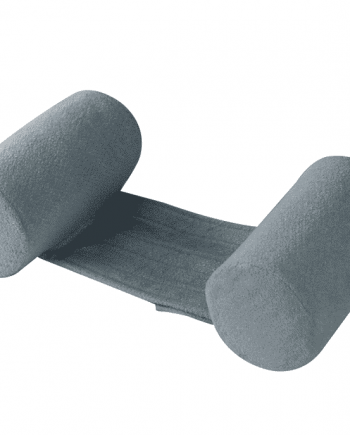
Breathe Eze Baby Support Cushion
$39.95 Select options This product has multiple variants. The options may be chosen on the product page -
Sale!

Organic Muslin Set 2 Pack
Original price was: $39.00.$19.95Current price is: $19.95. Select options This product has multiple variants. The options may be chosen on the product page