
Related products
What a co sleeper cradle is
A co sleeper cradle is a separate sleep space for your baby that sits at bed height, right beside where you sleep. Your baby has their own firm, flat surface, and you can see and reach them without getting out of bed.
That distinction matters. Red Nose Australia recommends that a baby sleeps in their own safe sleep space in the same room as a parent or caregiver for at least the first six months. Room sharing and bed sharing are not the same thing, and a co sleeper is designed to give you the first without the second.
Why ours does not incline
Some co sleepers are sold with an adjustable tilt, usually promoted as a way to help reflux. Ours does not tilt, and that is deliberate.
A newborn cannot lift or reposition their own head. On a sloped surface their chin drops towards their chest and their airway narrows, and they cannot correct it. Red Nose advises that a baby’s sleep surface should be firm and flat, not elevated or tilted. If reflux is affecting your baby, that is a conversation for your maternal child health nurse or GP rather than something to solve by changing the angle they sleep at. We cover this in detail in are inclined baby products safe for sleeping.
Setting it up beside your bed
Match the cradle height to your mattress so the two surfaces sit level. A gap or a step between them is the thing to avoid, so check the fit with your own bed rather than assuming.
Use the mattress made for the cradle, at the size and depth stated in the manual, and check the fit once it is in. No more than a 20mm gap between the mattress and the sides, which is roughly two adult finger widths. Keep pillows, doonas, bumpers and toys out of the cradle, and keep your own bedding clear of it.
Put the cradle on the side of the bed you actually get out of, and make sure the brakes or feet are locked. Check there is nothing within reach that a baby could pull in, including cords, cables and lamp leads.
How long they use it
Most babies use a cradle or bassinet for the first few months. The move to a cot is driven by size and mobility rather than a date. Once your baby reaches the weight limit for the cradle, or can push up on their hands and knees or roll over, it is time to move them.
Many families bring the cot into their room at that point rather than moving straight to the nursery, which keeps the room sharing recommendation intact while giving your baby more space.
Comparing your options
A co sleeper is one of several ways to do the early months. A cosy crib is a portable pod for supervised rest and play during the day rather than a sleep space. A standalone bassinet gives you something you can move around the house.
Our guide covers whether you need one at all and how a round bassinet compares with other shapes, and you can see the full bassinets and cradles range in one place.
Sleep on the move
The same firm and flat principle applies when you are out. A pram bassinet that lies flat works as a sleep surface for a newborn, whereas a seat that only tilts partway back does not. Our guide to choosing a single pram covers which configurations lie flat from birth, and you can compare the full prams and strollers range.
What to check before you buy a co sleeper
Height range. The cradle needs to reach your mattress height. Beds vary far more than people expect, particularly with a pillow top, so check the adjustment range against your own bed rather than assuming it will fit.
How it attaches or sits. Some models strap to the bed frame, others simply stand beside it. If yours straps on, check it works with your bed type, because a base with no frame to grip is a common problem.
Whether the side drops. A side that lowers is what makes a co sleeper genuinely easier than a standalone bassinet, and it needs to lock securely when raised.
Wheels and footprint. Measure the space beside your bed including how far the door opens and where you need to walk. A cradle on castors that moves through a doorway is far more useful during the day.
What it converts to. Some cradles go on to be used as a bedside table or a storage piece once the sleeping stage is over, which changes how you weigh up the cost.
-
Sale!
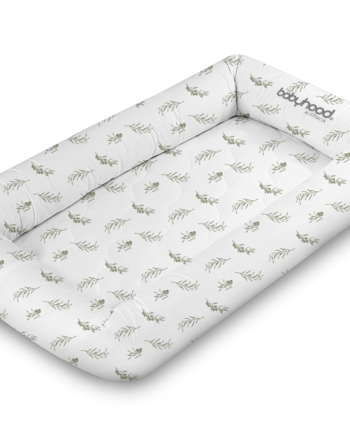
Breathe Eze Cosy Crib Original
Price range: $129.00 through $169.00 Select options This product has multiple variants. The options may be chosen on the product page -
Sale!
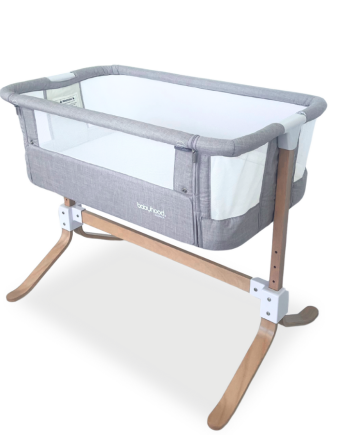
Co Sleeper Cradle Air
-
Sale!
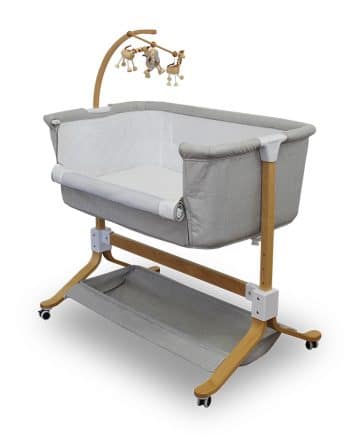
Kaylula Co Sleeper Cradle – Grey
-
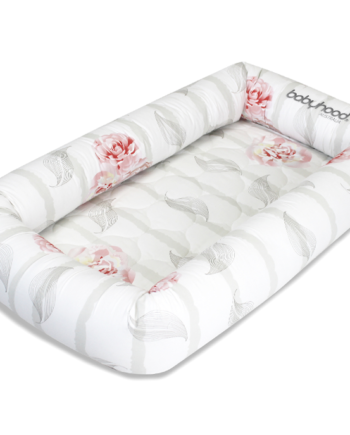
Organic Breathe Eze Cosy Crib
$199.00 Select options This product has multiple variants. The options may be chosen on the product page