
How To Swaddle Baby – Safe Sleeping Q&A With The Experts
We want to share a really important piece of information with you. In this video, you will learn how to swaddle your baby safely.
Related products
Why wrapping helps in the early weeks
Newborns are born with a startle reflex. Their arms fly out at a noise or a change in position, and it wakes them. A firm wrap contains that reflex, which is why a wrapped baby often settles faster and stays asleep longer in the first weeks.
It is a short lived tool rather than a long term habit, and the guidance below is what makes it safe while it lasts.
When to stop, which matters most
Red Nose Australia advises that wrapping should stop as soon as your baby shows signs of beginning to roll, or at three months of age, whichever comes first. Once a baby can roll, being wrapped stops them using their arms to reposition themselves, and that is the point at which a wrap becomes a hazard rather than a help.
Signs to watch for come earlier than the roll itself. Rolling onto their side, pushing up during tummy time, or lifting and turning the head with real strength all mean the wrapping stage is ending. If you see any of them, free the arms or stop wrapping altogether.
Firm across the chest, loose at the hips
The two halves of the wrap need different tensions, and this is where most mistakes happen.
Across the chest the wrap should be firm enough not to come undone, but not so tight that it restricts breathing. You should be able to slide a flat hand between the wrap and your baby’s chest.
At the hips and legs it should be loose. Red Nose notes that a wrap holding the legs straight and together may prevent normal hip development. Your baby’s legs need to be able to bend up and out at the hips, so leave room for them to move rather than wrapping the lower half tightly.
Keep the head and face uncovered
The wrap goes under the chin, never over it. Keeping the head and face uncovered is one of Red Nose’s six safe sleep recommendations, and a loose wrap that works its way up is one of the ways faces get covered.
That is also why the fabric and the technique matter together. A wrap that is too big or too slippery will come loose during the night.
Use a lightweight fabric
Red Nose recommends lightweight wraps such as cotton or muslin, and specifically advises that bunny rugs and blankets are not safe alternatives because they can cause overheating.
Dress your baby for the room rather than adding layers on top of a wrap. In warmer weather a nappy and singlet under the wrap is enough. In cooler weather a lightweight grow suit works. Overheating is a risk factor, so it is better to underdress slightly than to overdress.
What comes after wrapping
Most families move from a wrap to a safe sleeping bag, which gives warmth without loose bedding and without restricting the arms. Choose one sized for your baby’s weight and length, with a fitted neck and armholes so it cannot ride up over the face.
The rest of the sleep setup does not change. Baby on their back, on a firm flat surface, in a cot or bassinet that meets the standard, with nothing loose in the sleep space.
Where to read more
Our safe sleep for babies guide pulls the main recommendations together in one place.
If you are still setting up the sleep space, a co sleeper bassinet sits at bed height beside you for the room sharing months. Our guide also covers whether you need one and how a round bassinet compares with other shapes, and you can browse the bassinets and cradles range.
For sleep on the move, our guide to choosing a single pram covers which configurations lie flat from birth, and the full prams and strollers range is here.
Common wrapping mistakes
Wrapping too long. The most common one by far. Wrapping is for the first weeks, not the first six months, and the cue to stop is your baby’s development rather than the calendar.
Wrapping the legs tightly. A neat parcel looks tidier but restricts the hips. Legs need room to bend up and out.
Using a blanket or bunny rug. These are heavier than a wrap should be and are a recognised overheating risk.
Adding layers on top. The wrap is a layer. Dress your baby for the room with the wrap counted in, not on top of a full set of clothes and a blanket.
Wrapping over the shoulders and chin. The wrap starts under the chin so it cannot ride up over the face.
If you are unsure whether a wrap is right, your maternal child health nurse can check your technique in person, which is worth more than any written description.
-
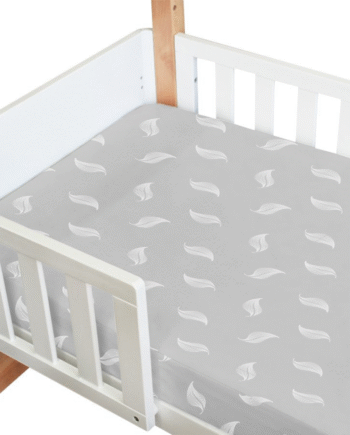
Amani Bebe Organic Standard Fitted Sheet – White Leaf
$44.95 Select options This product has multiple variants. The options may be chosen on the product page -

Kaylula Mila Cot
-
Sale!
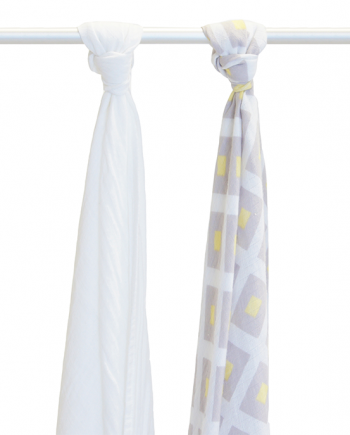
Organic Muslin Set 2 Pack
Original price was: $39.00.$29.95Current price is: $29.95. Select options This product has multiple variants. The options may be chosen on the product page -
Sale!
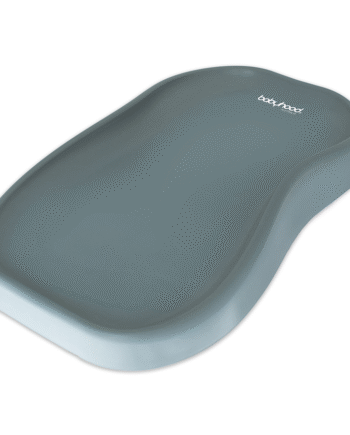
Ultimate Change Pad Grey