
Are drop side cots safe?
The short answer is absolutely! Drop side cots are safe for your baby.
Most new parents learn about parenting from Google. We wade through copious amounts of expert advice and parent testimonials, only to find ourselves more confused than when we started. This is particularly true when choosing a cot.
A drop side cot is a cot where one side of the cot lowers, so that a parent or carer can reach the child without falling into the cot or dropping your baby (cue the multitude of home videos of parents head first and bottoms up inside their child’s cot).
Australia is a world leader when it comes to safety in children’s products. The Australian Standard (AS/NZS 2172:2013) for cots is a strict standard for creating safer cots for our children. The Australian Standard has comprehensive regulations to ensure a safe drop side cot with some really serious drop testing of cots to ensure they withstand the most robust of toddlers. Drop side cots are regulated safely in most countries in the world, except the US, which has banned the use of drop side cots. This is largely because of the poor quality of the construction of cots sold in the US and a regulatory standard that was ineffective for testing a drop side on a cot, unlike in Australia – where we do it well.
Many brands do not offer or make a drop side cot, this is often the case because they don’t know how to do so, it is cheaper to make a fixed side cot or their cots are made from MDF or melamine, so they are not strong enough to safely operate with a drop side.
A drop side cot is safe and can have great benefits for parents and also your child, especially as they grow heavier.
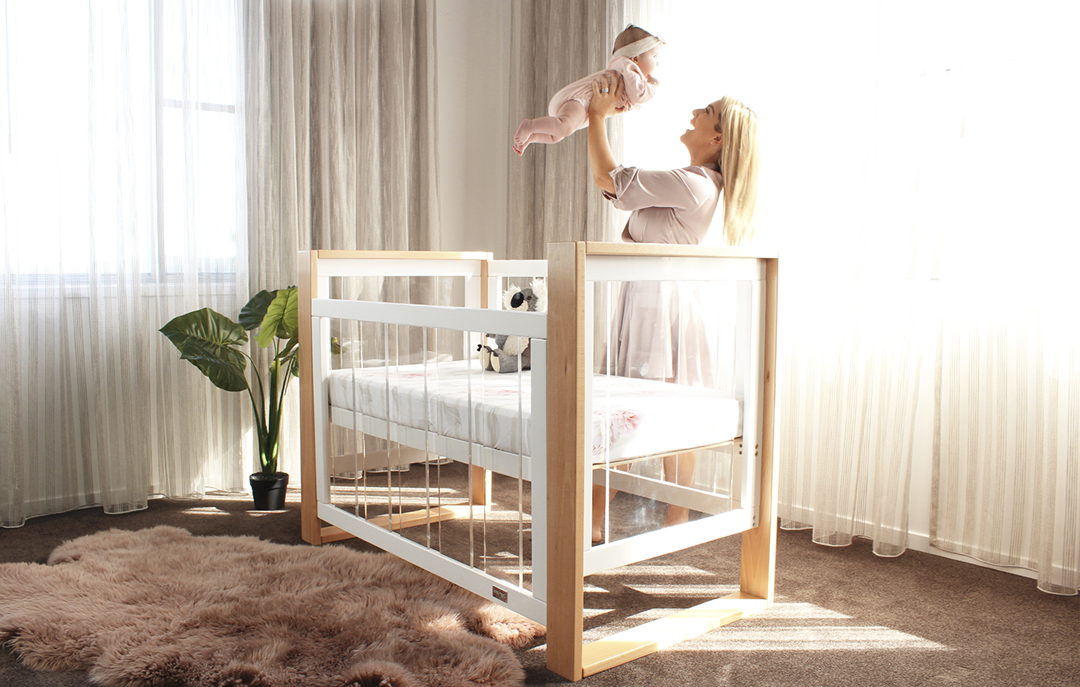
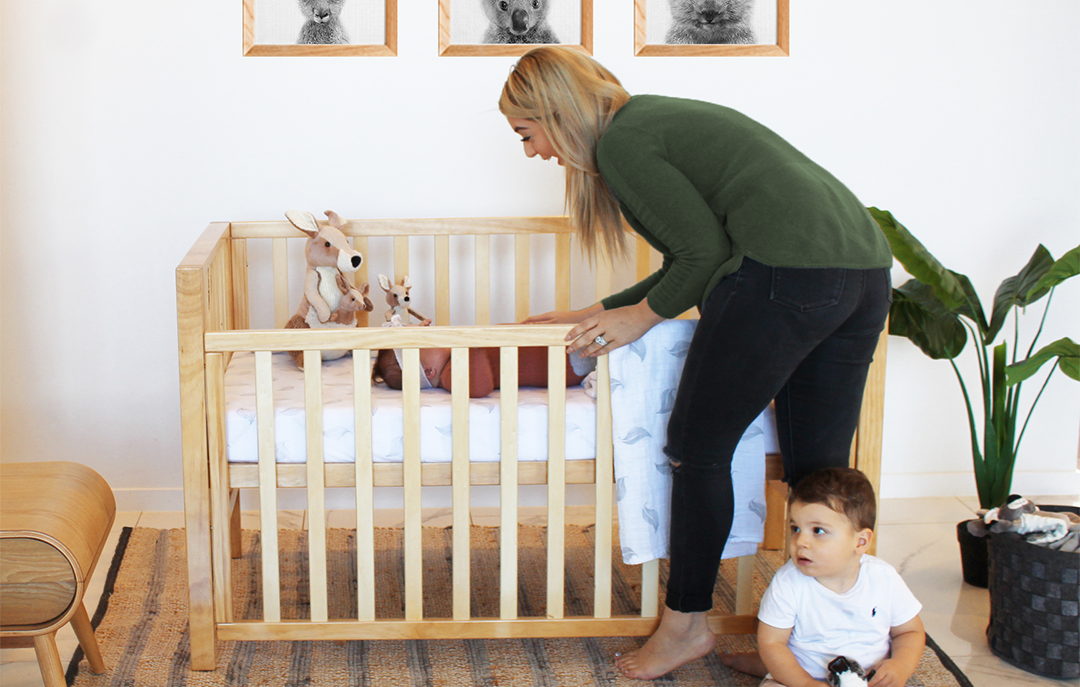
We manufacture cots with and without drop sides – so you can choose what is best for your family.
So here are some tips to help you decide if you need a drop side cot
1- Do you suffer lower back pain regularly?
2- Are you short? (good things come in small packages so it great to be short!)
3- Are you having a C section and are concerned about caring for your infant, after your birth?
4- Have you suffered an injury or have a disability that makes it difficult for you to bend over?
If you have answered yes to any of the questions above, then we would recommend you consider a drop side cot.
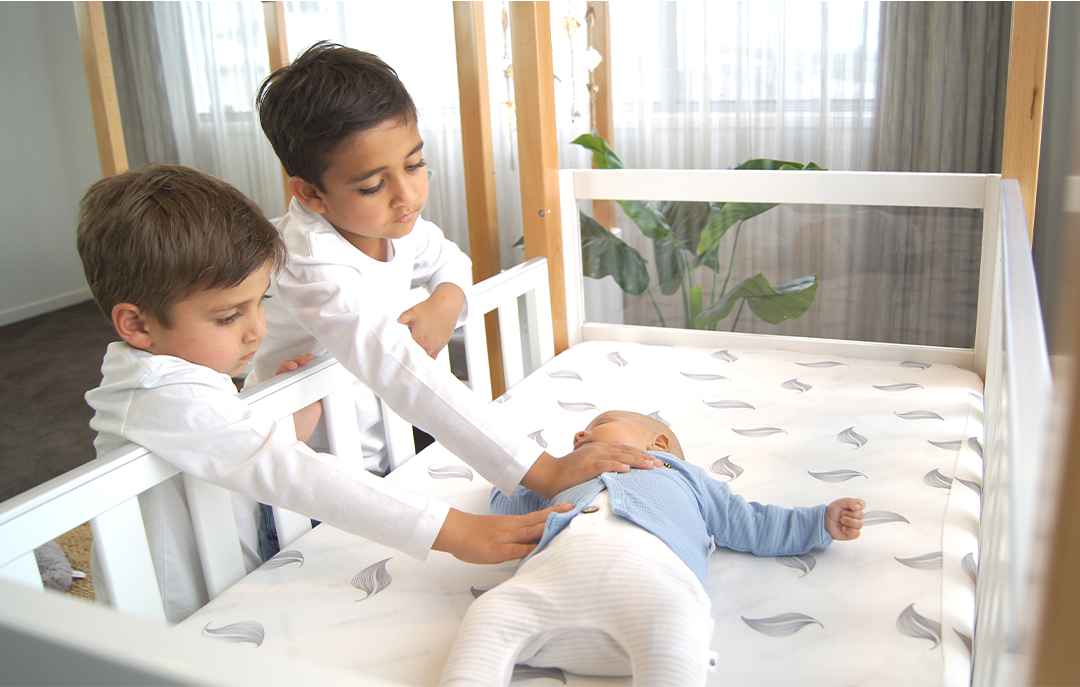
6 Tips on Buying a Safe Drop Side Cot
1- Purchase your cot from an Australian brand.
2- Look for a brand that tests their cots independently in Australia. Many brands only “comply” with the standard which means very little.
3- The cot must be tested by Furntech AFRDI (Australian Furnishing Research and Development Institute) regularly. Look for the orange tick.
4- The safest and most convenient drop side is a single hand drop side – not a trigger or pin mechanism. They are harder to operate.
5- If you can, test run the drop side to see how to use it, prior to your purchase or check if there is video showing how to use the drop side. It shouldn’t require 10 steps and 5 arms to operate!
6- Always purchase a new cot. If you want to know why, read our blog about buying second hand here.
We have been designing and manufacturing drop side cots for over 30 years and we know how to make them safely, for your baby and our peace of mind. If you would like more information about how we design our drop side cots watch our VLOG from our engineering team about the benefits to your health and well-being of a good quality, smooth single hand drop side cot.
What the safety standards mean for a drop side cot
From 19 January 2026, cots sold in Australia have to meet the Consumer Goods (Infant Sleep Products) Safety Standard 2024, together with an information standard covering labelling and instructions. A cot can meet the safety requirements through AS/NZS 2172:2013 or through one of the accepted overseas equivalents.
For a drop side cot, the parts of that assessment that matter most are the ones covering gaps, stability and the strength of moving parts. A drop side has to lock securely in the raised position, and the locking mechanism has to keep working after repeated use. That is why it is worth asking about independent testing rather than taking a compliance claim at face value.
When you compare models, ask for the test information and check that the cot arrives with assembly instructions and permanent warnings on the product itself. If you are working out what is available, our guide to the best baby cot options sets out how the current range compares, and you can browse all baby cots in one place.
Mattress fit and the two finger rule
A drop side does not change what makes a mattress safe, but it does make the fit easier to check, because you can see the full length of the cot side when it is lowered.
Use the mattress the cot manufacturer specifies, at the size and depth stated in the manual. Red Nose Australia advises that the gap between the mattress and the cot sides should be no more than 20mm, and gives a simple check: no more than two adult finger widths should fit between the edge of the mattress and the cot side. A baby can become trapped in a larger gap, which is dangerous if their face becomes covered or their neck is restricted.
The mattress should be firm and flat with all packaging removed, and any waterproof protector needs a tight fit so it cannot bunch or work loose.
Looking after the drop side mechanism
A drop side is a moving part, so it benefits from occasional attention. Check the locking points every few months, keep the runners clear of dust and fabric, and retighten the frame fixings if the cot has been moved between rooms.
Always return the side to the raised and locked position before you walk away, even for a moment, and check that the lock has engaged rather than assuming it. If a lock ever feels loose, or the side moves when it is supposed to be secured, stop using the drop side function and contact the manufacturer.
How long a drop side cot lasts
The drop side earns its keep in the first year, when you are lifting a baby in and out several times a day and often recovering from birth. After that, the value comes from how far the cot converts.
Most cots convert at least once, from cot to toddler bed by removing one side and fitting a toddler rail. Check two things before you buy. Whether the toddler rail is included or sold separately, because that changes the real cost, and whether the base has more than one height setting, since you will need to drop it as soon as your baby can sit up or pull themselves up.
Planning the rest of the nursery
Most families settle the cot first and work outwards from there.
If your baby will start in a bassinet, it is worth deciding early. Our guide covers whether you need one and how a round bassinet compares with other shapes, and you can see the current bassinets and cradles range.
The pram is the other early decision, and the same thinking about your back applies, because weight and fold matter every single day. Our guide to choosing a single pram covers what to compare, and you can browse the full prams and strollers range.
If you have any questions. feel free to email us at sales@babyhood.com.au or call us (07) 3208 3555 or visit our Brisbane showroom so we can help you to find the best solution for you.