
Safe Sleeping Q&A With The Experts
We want to share a really important piece of information with you. In this video, you will learn what is SIDS (Sudden Infant Death Syndrome) and how to avoid it.
Related products
SIDS and SUDI, and why the terms differ
The two terms get used interchangeably and they are not the same thing.
SUDI stands for Sudden Unexpected Death in Infancy. It is the broad category covering any sudden and unexpected death of a baby where the cause is not immediately obvious. When a SUDI is investigated, the cause may turn out to be an accident, asphyxiation, an infection, or a metabolic or genetic condition.
SIDS, Sudden Infant Death Syndrome, is the subset where no cause is found after investigation. It is a diagnosis of exclusion rather than a mechanism.
The distinction matters because a large proportion of SUDI deaths are sleep related and preventable. That is where the safe sleep recommendations come from.
The six safe sleep recommendations
Red Nose Australia, one of the country’s leading authorities on safe sleep, sets out six recommendations that apply from birth to twelve months.
Always put your baby on their back to sleep. Keep their head and face uncovered. Keep your baby smoke free, before and after birth. Provide a safe sleeping environment, meaning a compliant cot, a firm flat mattress, and no soft items. Sleep your baby in their own safe sleep space in the same room as a parent or caregiver for at least the first six months. And breastfeed your baby if you are able to.
None of these are complicated, and none of them require anything you have to buy. That is the point of them.
Why back sleeping matters
Back sleeping is the single most effective of the six. It keeps the airway clear and allows the protective reflexes that let a baby respond if their breathing is obstructed.
Once your baby can roll from back to front and front to back on their own, you do not need to keep turning them over. Keep putting them down on their back, and make sure the sleep space has nothing loose in it.
What a safe sleep space looks like
A cot or portable cot that meets the mandatory standard, with a firm flat mattress made for it and no more than a 20mm gap at the sides. No pillows, doonas, bumpers, soft toys or loose bedding. A safe sleeping bag, or lightweight bedding tucked in firmly to chest level.
Nothing propped, tilted, padded or weighted. Products that are curved, padded, propped or have restraints are not designed for sleep and are not safe for it, however settled a baby looks in them.
Things that are commonly misunderstood
Room sharing is not bed sharing. Your baby in their own space beside your bed is the recommendation. Your baby on your mattress is not the same thing.
Falling asleep in a bouncer, swing or car seat happens to every baby. The response is to move them to their cot or bassinet when you notice, not to leave them because they finally settled.
Overheating is a risk in both directions of the year. Dress your baby for the room temperature and count the wrap or sleeping bag as one of the layers.
Where to read more
Our safe sleep for babies guide sets out ten expert tips in one place.
For the sleep space itself, a co sleeper bassinet is designed for the room sharing months. Our guide covers whether you need one and how a round bassinet compares with other shapes, and the full bassinets and cradles range is here.
The same principles apply out of the house. Our guide to choosing a single pram covers which configurations lie flat from birth, and you can compare the full prams and strollers range.
What actually reduces the risk
It helps to know that the recommendations are not a list of equally weighted rules. A few of them do most of the work.
Back sleeping is the most effective single measure. Keeping the sleep surface firm and flat with nothing loose on it is next. Keeping your baby away from cigarette smoke, before and after birth, matters more than most parents realise. Room sharing for the first six months is well supported. Breastfeeding, where it is possible, is associated with lower risk.
Everything else follows from those. If you are trying to remember one thing at three in the morning, it is back, firm, flat and clear.
When to ask for help
Safe sleep information is worth having, but it is not a substitute for someone looking at your particular situation. Your maternal child health nurse, midwife or GP can talk through your baby’s sleep, your room setup and anything that is worrying you.
If your baby has reflux, was born prematurely, has a medical condition, or if you have been advised to do something that differs from the general guidance, follow the advice of the health professionals who know your baby rather than anything you read online, including this page.
-
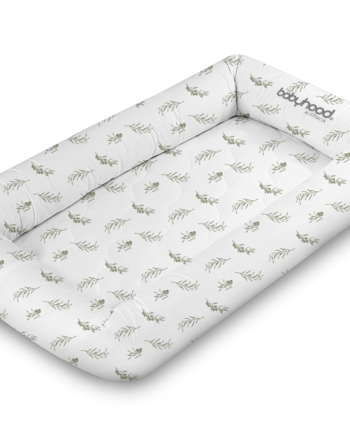
Breathe Eze Cosy Crib Original
$169.00 Select options This product has multiple variants. The options may be chosen on the product page -
Sale!
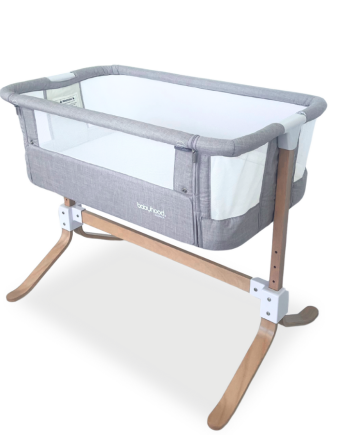
Co Sleeper Cradle Air
-
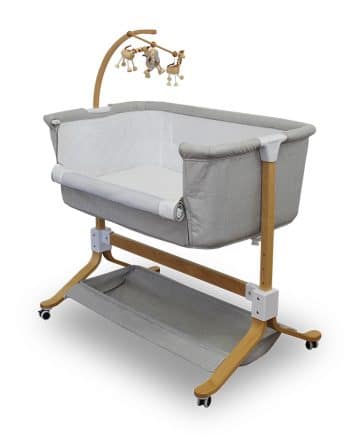
Kaylula Co Sleeper Cradle – Grey
-
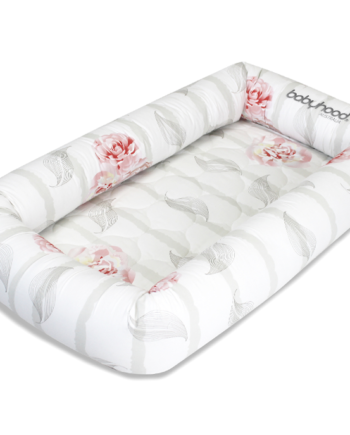
Organic Breathe Eze Cosy Crib
$199.00 Select options This product has multiple variants. The options may be chosen on the product page